Thirty-one. That was the parking garage amount my neighbour Lenore paid last spring to sit in a waiting room for three hours and be told, in seven minutes, that her bloodwork was “within normal limits.” She never got to mention the sleep aid. She never got to mention the cat that had started waking her at four. She drove home, paid the garage, and told me at the mailbox that she supposed she was just getting old.
I have been annoyed about that thirty-one for months. Not because the doctor did anything wrong, exactly. Because the visit was over before the real question was asked. After sixty, a memory worry deserves better than seven minutes and a parking ticket. It deserves a little preparation, most of which you can do at your own kitchen table before you ever sit on that crinkly paper.
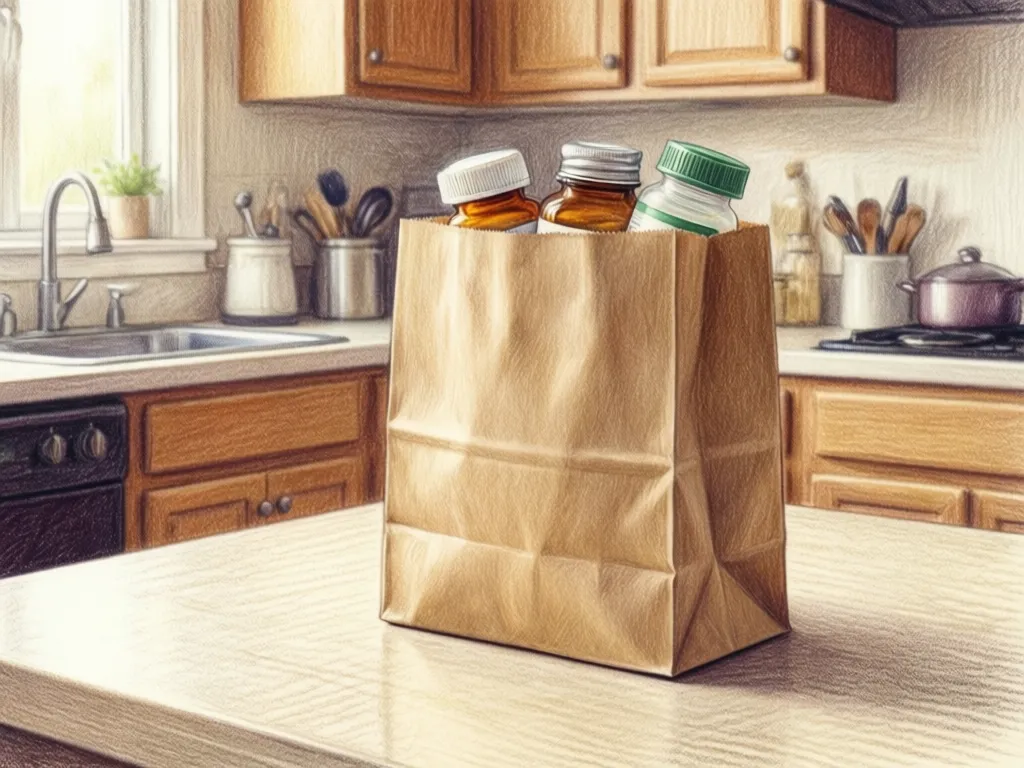
The brown bag on the examination table
I ran a hospital pharmacy for thirty-two years, most of it in a basement with no windows, and the single most useful thing I ever did was read the labels people brought me. Everything in the bag. The bottles from the doctor, the bottles from the drugstore shelf, the things that had migrated to the back of the cabinet years ago and never left.
When Lenore finally made her list, it had nine items on it. Nine. She had never put them all in one place before. Nobody had ever asked her to.
So before you change anything — before you stop a single pill on your own, before you decide your memory is simply going — go watch the memory explainer video first. It lays out what is usually behind these slips and what actually helps, and it will make your next appointment shorter and better.
The phone call with Carol
My sister Carol called me from Arizona last fall, upset. She had gone to her doctor about forgetting names and came home convinced something terrible was underway.
“What did he say?” I asked.
“He said my numbers looked fine.”
“What did you tell him?”
“I told him about Dad. He nodded and typed.”
“Did you mention the ear situation?” There was a long pause before he asked what ear situation I meant.
Carol has been turning the television up for two years. She pretends she does not. Here is the thing I tell everyone at the senior centre on Elm Street: hearing is memory. I am not going to quote statistics at you; I am going to say what I saw at the counter. People who got their ears checked often looked sharper within months, because they were finally hearing the conversation they were supposed to remember.
 Why memory slips after sixtyBefore you change anything, watch the video on memory after sixty.
What I actually spent getting ready
I am a frugal person by temperament and by pension, so when I decided to do this properly for myself a couple of years back — a real memory check, done right — I kept track. Imperfectly. I am a pharmacist, not a bookkeeper.
The hearing test at the clinic in town: about sixty, and worth every penny. The bloodwork my internist ordered: covered by my insurance, though the lab billed me eleven for something called a “draw,” which I contested and lost. The notebook I keep names in, the one by the phone: four. The parking garage on two separate visits: fourteen, and I am still irritated. My copay for the longer appointment, the one where I actually asked for extra time up front: thirty-five.
Call it a hundred and twenty-five, all in, rounded and probably missing something. Less than Lenore’s three separate visits where nothing got asked. The expensive part of a memory worry is rarely the test. It is the visits that go nowhere.
The two ways I tried to track names
I have personally used two systems for the thing that embarrasses most of us — the name that will not come. I know it well. Mine was the woman at church whose name I could see but not say for an entire year.
The first system was my phone. An app, recommended by a grandchild. I hated it. The screen was small, the typing was slow, and by the time I had unlocked the thing I had forgotten why I opened it. It also made me feel surveilled, though I cannot tell you by whom.
The second system is a small paper notebook that lives by the telephone. Name on the left. One detail on the right. “Marjorie — grows tomatoes, husband was a teacher.” That is all. When someone new comes to the walking group, I write it down the same day. When I forget, I look it up before I see them again. What is written down is remembered — not because the paper has magic, but because writing it once and reading it twice beats panicking in a parking lot.
The notebook won. It cost four and it has never needed a software update. My husband Walt, who teases me about my lists, said, “You’ve turned the house into a filing cabinet.” He is not wrong. But last month he asked me what the neighbour’s name was, and I had it written down.
The appointment that went sideways
I should tell you about the time I did this badly, because it cost me.
Years ago, before I knew better, I went with a friend to her appointment about memory. I had a list. She had a list. We were so prepared, so organized, that we talked the entire time. Every question the doctor asked, I answered. Every symptom, I described. My friend sat there nodding politely, the way she does at church.
The doctor got my version of her memory. Not hers. I had been so helpful that I made the visit useless. She left with a referral she did not need and a fear she did not have when she walked in. What it cost her was three months of worry and one specialist bill she should never have received. What it cost me was a lesson: if you bring someone, and you should, sit on your hands. Be the notebook, not the voice. Bring the brown bag, hand it over, write down what is said. But let the person with the worry do the talking.
When I started the brown-bag reviews at the senior centre on Elm Street four years ago, most people came in with the same posture. Apologetic. Frightened quietly. Sure they were losing something they would not get back.
The first year, I mostly listened and made lists. The second year, I started sending people to Dr. A doctor I trust, an internist I worked with at the hospital, because he actually reads the bag. The third year, a friend from the walking group started bringing people to me before their appointments instead of after, which changed everything. Prepared people get better visits. That is not a statistic, that is just what I watched happen.
Now, in the fourth year, the conversations sound different. Less “what is wrong with me” and more “here is what I brought, where do we start.” The fear did not vanish. But it got organized, and organized fear is much smaller than the other kind.
Here is the myth: that you walk into a doctor’s office with a memory worry and either get told you are fine when you are not, or get handed a diagnosis you cannot take back. One of those two doors.
Here is what actually happens, from what I have seen: most of the time, nobody opens the brown bag. Most of the time, nobody asks about sleep, or the television volume, or the new grief nobody mentions because it feels off-topic. The visit is short and the checklist is short and the easiest explanations never get examined.
Those who succeed walk in with the bag, the list, and one specific sentence rehearsed. Not “I think I am losing my mind.” Something like: “I want to know if anything I take could be affecting my thinking.” That sentence changes the room. I have watched it change the room.
So before you book anything, before you stop anything, before you assume anything — sit down and watch the explainer on memory slips video all the way through, then make your list. Then call the office and ask, plainly, for a longer appointment. You are allowed to ask. The pharmacist, by the way, often has more time than the doctor to look at your bag. Use her.
I still lose my keys. Last month I found them in the refrigerator, next to the mustard, and Walt said nothing at all, which was worse than anything he could have said. Ordinary forgetting has a shape. So does the other kind, and they are not the same shape, and a good visit — a prepared one — is how you find out which one you are carrying.
Most of the time, the answer is boring. Boring is wonderful. Boring is what you are hoping for, and boring is usually what the bag contains.