Most memory trouble I see is really a rhythm problem.
The day stops having a spine after sixty. Work used to give it one. The children used to give it one. Then one day you look up and it is 2 in the afternoon and you have not spoken to anyone or eaten anything hot, and you wonder why your mind feels like porridge. I spent 32 years watching people come through the basement pharmacy, and the ones who held steady were rarely the ones with the best genes. They were the ones whose Tuesdays looked like their Thursdays.
The kettle at the same hour
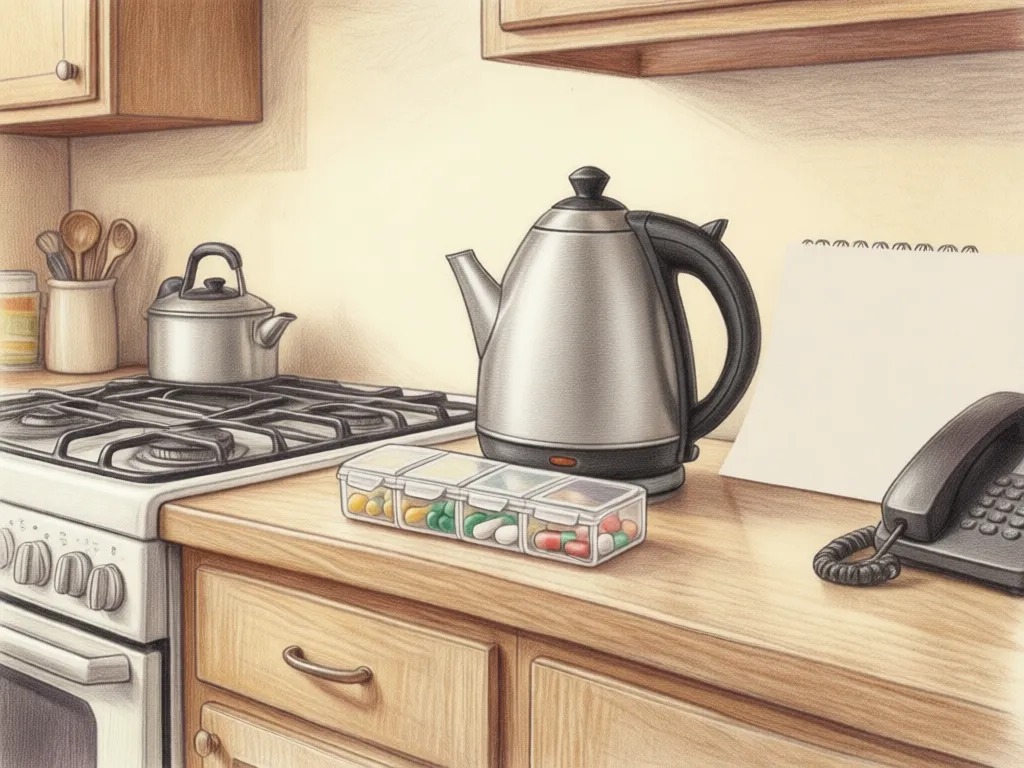
I mean a real anchor, not a vague intention. Mine is the kettle at half past six, and the pill organiser on the kitchen table gets filled Sunday morning while the coffee drips. That is the whole ceremony. Your body keeps its own ledger, and it likes the entries to match.
My sister, my sister in Arizona, calls me with her worries, and half of them dissolve when I ask what time she got up. She gets up when she wakes, she says. That is not a rhythm. That is weather.
Shoes by the door before breakfast
Here is the comparison, because I have done both. For two years I walked when I felt like it, which meant I walked when the day had already gone sideways, which meant most days I did not walk. Then a friend from the walking group, who runs the walking group at the senior centre on Elm Street, got me putting my shoes by the door the night before and going out before breakfast, before I could negotiate with myself. The scheduled version won by a mile, and I say that as someone who hates being scheduled. The spontaneous version sounds freer. It is just slower erosion.
What the notebook actually cost me
People think this costs money. Let me tell you what my setup cost, imperfect and rounded, the way I actually figured it on the back of an envelope one January. Paper calendar by the phone, the kind with big squares: maybe a small cost, replaced yearly. The names notebook, a plain steno pad: cheap enough, lasts me a good while. The pill organiser: a small one-time cost, years ago. The blood-pressure cuff in the hall drawer was the big outlay at the time, and even that struck me as less than a decent pair of winter boots. Call it a modest total across three years, most of it the cuff. The walking group costs nothing. The kettle was already mine.
I have paid more for less, and so have you.
Hearing is part of the rhythm
Now that the problem is sitting on the table, pull up the full video and watch it before you change anything else. It will show you what is usually underneath the slips, and it is worth your whole attention.
A man misses what his daughter said on the phone, feels foolish, stops calling. I keep a running note on sleep, hearing and sight after sixty because the three travel together, and you cannot fix memory while ignoring the inputs. Get the ears checked before you blame the brain. I have said it at the pharmacy counter at the grocery store, where they still know me, and I will say it here.
The myth of the big overhaul
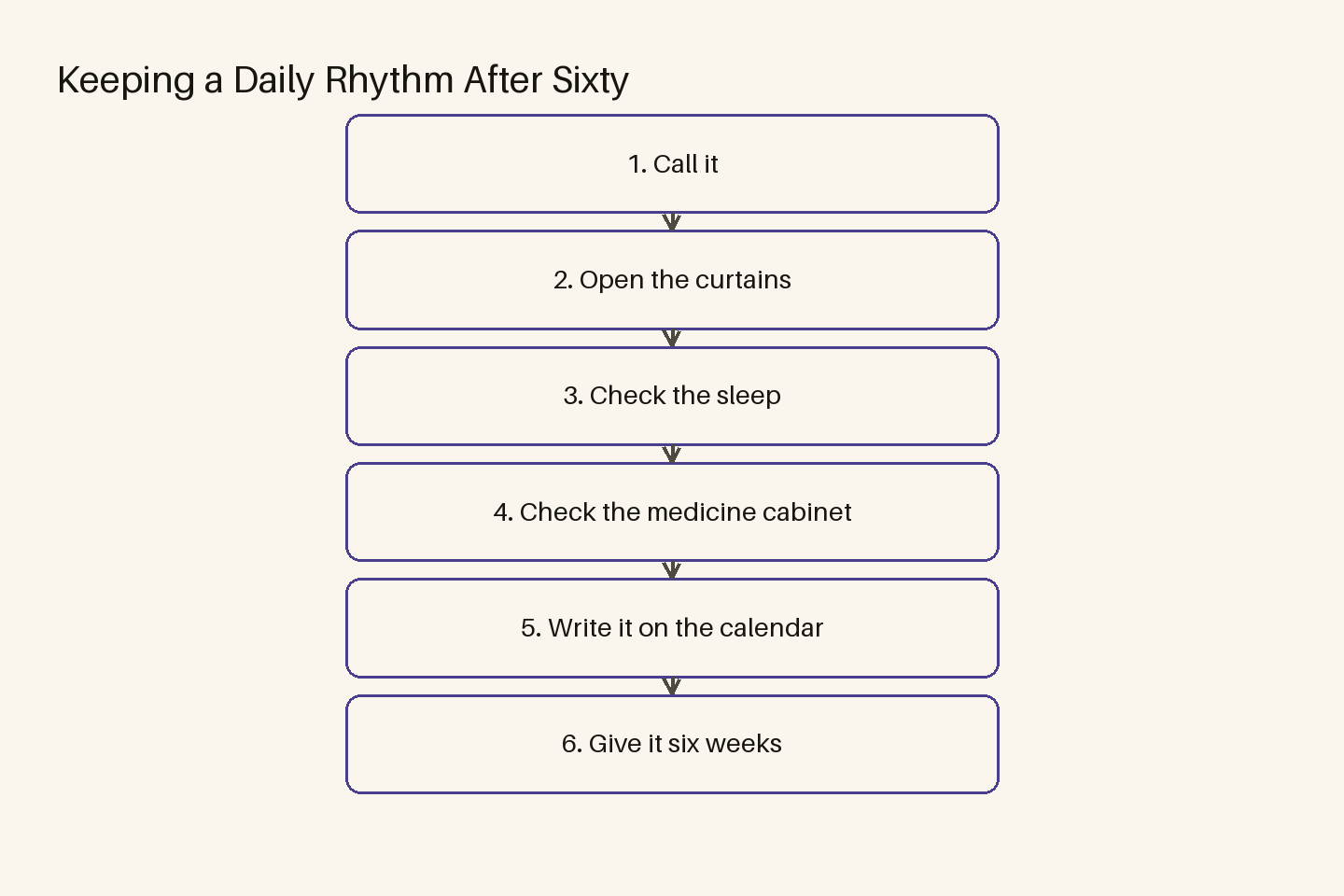
The myth is that you need a new life by Monday. What actually happens, in my firsthand experience, is this: someone decides to fix everything at once — sleep, food, walking, the pills, the social life — and by Thursday the whole scaffold has collapsed and they feel worse than when they started. I have watched it dozens of times. The ones who improve pick one thing. One. They give it six weeks before they judge it.
My own list is short and I follow it most days, not all days.
Wake at the same hour, weekends included, within about thirty minutes.
Open the curtains before the kettle, light on the face.
Pills from the organiser with the first coffee, never on an empty stomach if the label says otherwise, and I read the label every time even after all these years.
Shoes on, out the door, twenty minutes minimum, before any decision-making is allowed.
One line in the names notebook if I met someone new or learned something worth keeping.
Blood-pressure cuff twice a week, written on the paper calendar by the phone, not remembered — written.
Check the sleep before you suspect anything darker. Check the medicine cabinet before that, always.
I had my own slip last Tuesday — could not find my keys, found them in the fridge next to the butter. That is ordinary forgetting. It has a shape: you were distracted, you were rushing, it comes back to you later. The other kind has a different shape, and your doctor knows it, and it is not what this note is about.
So pick one. The wake time, if you ask me, because everything else hangs off it. Write it on the calendar. Give it six weeks. Do not add a second thing until the first is boring. Boring is the goal. Boring is what a spine feels like.
 How to keep your memory steadyThe video explains what to do about memory slips after sixty.
Before you close this note and go make tea, open the full video now and let it run while you sit there. It is the next thing to do, not a thing to save for later.
Tomorrow morning the kettle goes on at half past six, and the shoes are already by the door, and the left one has a pebble in it I keep meaning to shake out.