The waiting room had a clock with a second hand that ticked loud enough for me to hear and, apparently, not loud enough for the man across from me. He had brought his wife’s handbag. She had gone in already, through the door with the little window, and he was holding the bag on his knees like a casserole he was not sure he had agreed to bring. He told me she had been saying “what” at him for two years. He had been saying it back, louder, which he admitted was not a system.
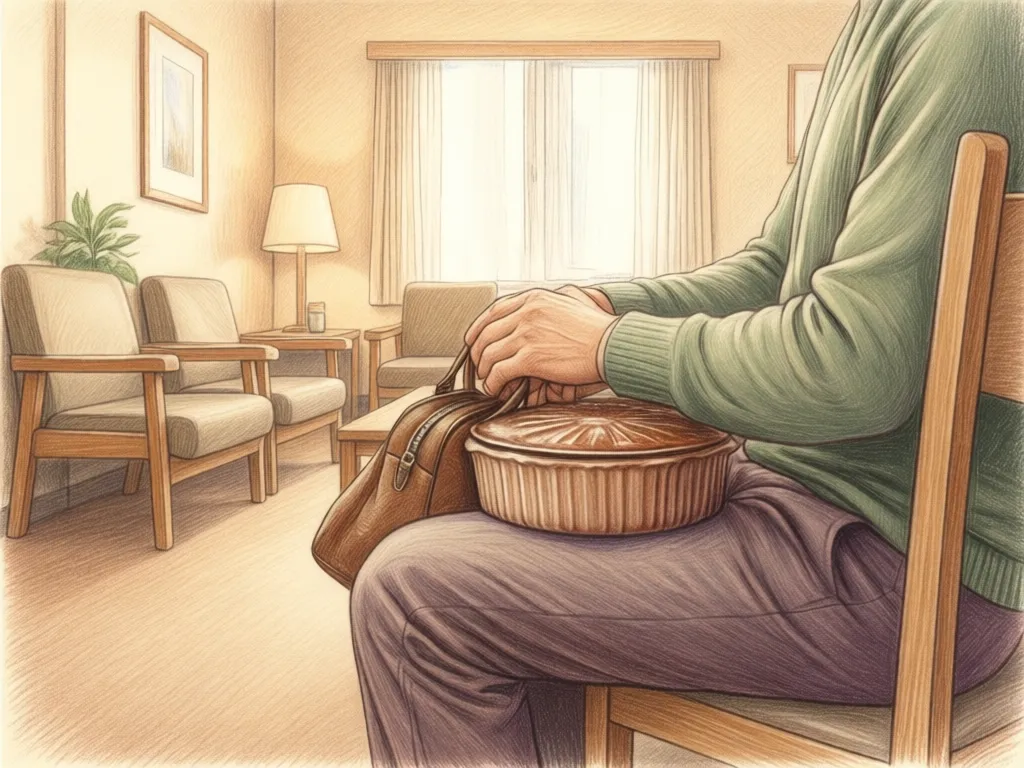
I know that room. I sat in it with my mother, years ago, in a chair that wanted me to lean back farther than I like. Her handbag was vinyl and it creaked. That is the sound I remember from her hearing test. Not the beeps.
The Soundproof Booth
What happens inside is smaller than people expect. You sit in a little booth, or a quiet room, with headphones on. The tester plays tones, high ones and low ones, some so soft I was not sure I heard them. You press a button, or raise a hand, when you do.
That is the part that surprises people. You are supposed to answer the sounds you barely hear. The ones you are sure about do not tell them much. My mother kept her hand down for whole stretches and then said afterward that she had heard plenty. She had. That was not the test.
Then they say words. Some through static. Some at a volume just above a whisper. You repeat what you catch, even if it sounds like nonsense. “Say the word.” Sometimes the word you give back is not the word they said, and that is written down, and it matters more than the tones do.
The whole visit usually felt like it ran under an hour. Nothing hurts. Nobody is graded. The tester is not writing down that you failed. They are drawing a picture of which sounds your ears carry well and which ones fall away, and the picture is what a good fitter works from later.
The Paper with the Mountain Ranges
Afterward you get a chart. It looks like mountain ranges drawn by someone with a ruler. Left ear, right ear, across the top the pitch of sounds, down the side how loud they have to be before you catch them.
I have sat with people at the senior centre on Elm Street who folded that paper twice and put it away without looking. I understand the impulse. But the chart is only a map. It does not say anything about your mind. ” She was not confused. She was missing the first sound of the word and guessing the rest.
That is a lot of kitchen tables. If you are wondering whether your own slips look like the ordinary kind, the signs that hearing is fading are quieter and more specific than most people think, and they are worth knowing before you worry about anything bigger.
The Wife Who Came Back Out
The thing that went wrong in that waiting room was not the test. It was the year before it. Her husband told me, while we waited, that he had stopped going to their card group because she answered the wrong question so often that the table had started to smile at her. She knew they smiled. So she stopped talking first. Then she stopped going.
What it cost them was a winter. A whole season of Tuesday nights they did not get back. That is what I see when hearing goes unlooked-at: not a disaster, just a slow closing of doors that were never locked. There is a reason I keep hearing and what it may protect on my own reading list, and it is not to frighten anyone. It is because the ears and the memory share more of the load than we used to think.
When she came back out through the door with the little window, she was holding her chart and looking at her husband.
“You said ‘put the kettle on,’” she said. “For a year I thought you were saying ‘put the cat out.’ I have been putting the cat out every night at four in the afternoon.”
“The cat has been very patient,” he said.
They left holding hands, which I mention only because it is the usual ending and nobody warns you about it.
So before you decide your memory is the problem, pull up the watch the full video on memory slips after sixty and see what is usually underneath them. It is the thing I would check first, and it takes less of your afternoon than a hearing test does.
A hearing test goes like this, and I have described it nearly word for word: you sit in a quiet room, you listen for sounds at the edge of nothing, you repeat words back like a schoolchild, and then someone shows you a drawing of your own ears. Nobody scolds you. You come out knowing something true, which is more than you went in with. And if you snore on top of it, or wake with a dull head, that is a different drawer to open — the tangle of bad sleep and foggy mornings has fooled more than one family I know, mine included.
What I actually do, when someone at the brown-bag table says they are worried, is plain enough. I ask when their hearing was last checked, and write the answer in the names notebook. I ask what they take at night, every bottle, because the medicine cabinet is still the first place I look. I suggest they phone their doctor’s office and ask for a hearing referral, or ask the pharmacist at the grocery counter where the nearest testing is, because the pharmacist will know. And I write the appointment on the paper calendar by the phone, because what is written down gets done.
 Why memory slips after sixtyBefore you change anything, watch the video on memory after sixty.
If you have read this far and you have been saying “what” at somebody, or somebody has been saying it at you, open the full video on what sits behind forgetting and let it run while you have your tea. Do it before you talk yourself out of it.
The man with the handbag never gave it back, by the way. I saw them at the card group in February. She had the bag. He had her chart folded in his shirt pocket like a handkerchief. Walt says I notice other people’s pockets more than my own keys. He is not wrong about that either.