Last spring I stood at a wake in a church basement, holding a paper plate of potato salad, and I could not call up the name of the woman walking toward me. I had filled her pill bottles for eleven years. I knew her husband’s name, her dog’s name, her street. Hers was gone.
So I said, “There you are,” and hugged her instead. It came to me in the parking lot, of course. Ruth.
I want to tell you what I did about it, because a name lost at a wake feels bigger than a name lost at the grocery store. The room is quiet and the stakes feel high and somebody’s grief is standing right there. But the forgetting itself is the same animal.
The Names Notebook on the Table
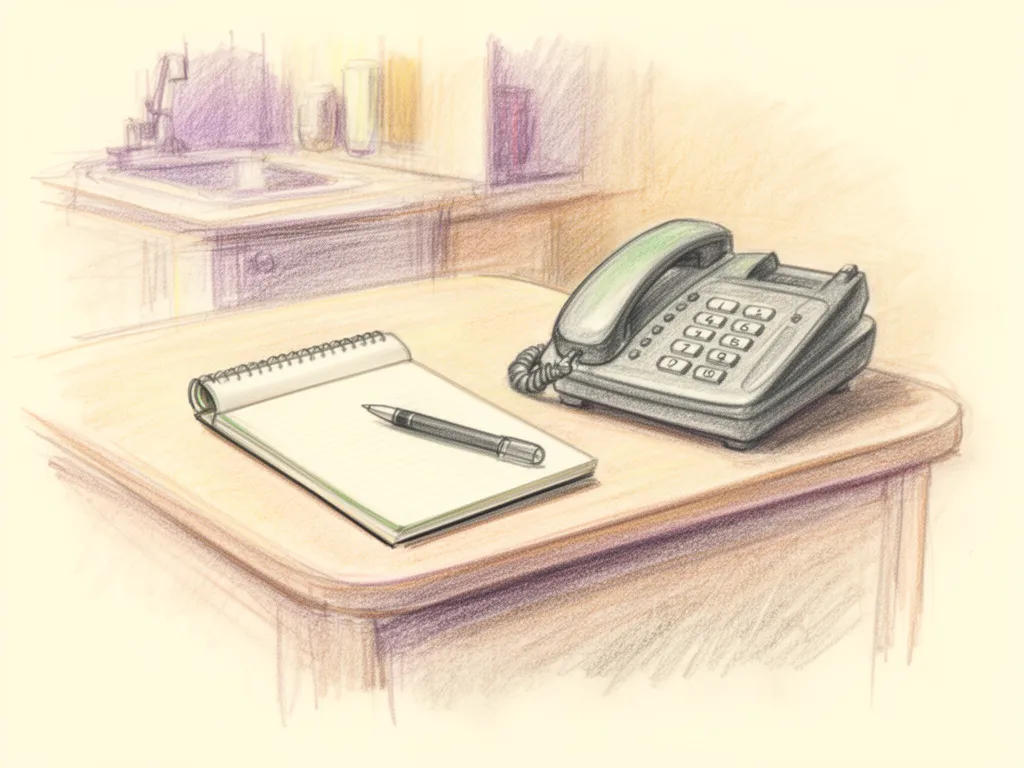
When I got home I wrote Ruth in the notebook I keep by the phone, the same one where names go after church or the walking group. The rule holds in my experience: what is written down tends to be remembered, especially when it comes to losing a name and finding it again. Not because the paper remembers for you. Because the act of writing it, slowly, in your own hand, felt like laying the name down a second time.
Bev, who runs the walking group at the senior centre on Elm Street, does the same thing with a pencil stub on the back of her sign-up sheet. She told me she has never once read the names back. She just needs to write them.
A Wake, a Kitchen Timer, and Sixty Seconds
Here is the worked example, because I believe in numbers you can hold. The wake was March 14th, a Thursday. I got home at about four. I wrote the name at 4:10. Three weeks later, April 4th, I saw Ruth again at the pharmacy counter in the grocery store, and her name was there before she reached the aisle. One writing, one repeat, twenty-one days. That is the whole recipe.
I timed myself once, out of curiosity. Writing a name, a date, and one detail — “Ruth, blue coat, her sister’s funeral” — takes me about a minute. Less time than the kettle.
The cost breakdown, such as it is, and I did it honestly but imperfectly: a steno pad from the drugstore, the plain kind, maybe a dollar and change. A pen I already had. Call it a negligible total, rounded, since my husband says I never count the pens I steal from his desk. The real cost is the habit, and that took me the better part of a month to stop skipping.
If you want the fuller shape of what to do in the moment itself, when the face is in front of you and the name is not, the steps I walk through after a lapse at a gathering are the same ones I used that Thursday. And if a lapse like this is what has your daughter watching you across the casserole dish, how to open that talk with family is gentler than you think.
One thing I will say plainly, because the pharmacist in me never retired: before you decide a lost name means something about your mind, look in the brown bag. Dr. A doctor I trust tells my people the same thing.
 How to keep your memory steadyA plain video on why memory gets patchy after sixty.
Most of what I see at the brown-bag table is the ordinary kind of forgetting, the kind that has a shape and a fix. But the video explains the usual reasons better than I can in a note, and what to do about them. Pull up the full video now, while the kettle boils, and watch it all the way through.
Ruth sent a Christmas card this year. She spelled my name “Diane K.” with a period, like the K was still thinking it over. I know the feeling. Some days the K is all any of us has got. My husband has taken to calling me “K” when he can’t find his reading glasses, which is most days, and now the cat answers to it too.