She set the bottle on my kitchen table like it was evidence. A little round thing from the drugstore shelf, multivitamin printed on the front. Ruth is seventy-one and she had driven across town because she could not remember her neighbour’s name at the mailbox, and the neighbour has lived beside her for nine years. She said it the way people say it when they have been practising in the car. I think I am losing it, Diane. I did not answer right away. I picked up the bottle, read the back, and asked her when she had last had any blood work done. She could not remember that either, which made her laugh, a short dry laugh that did not sound amused.
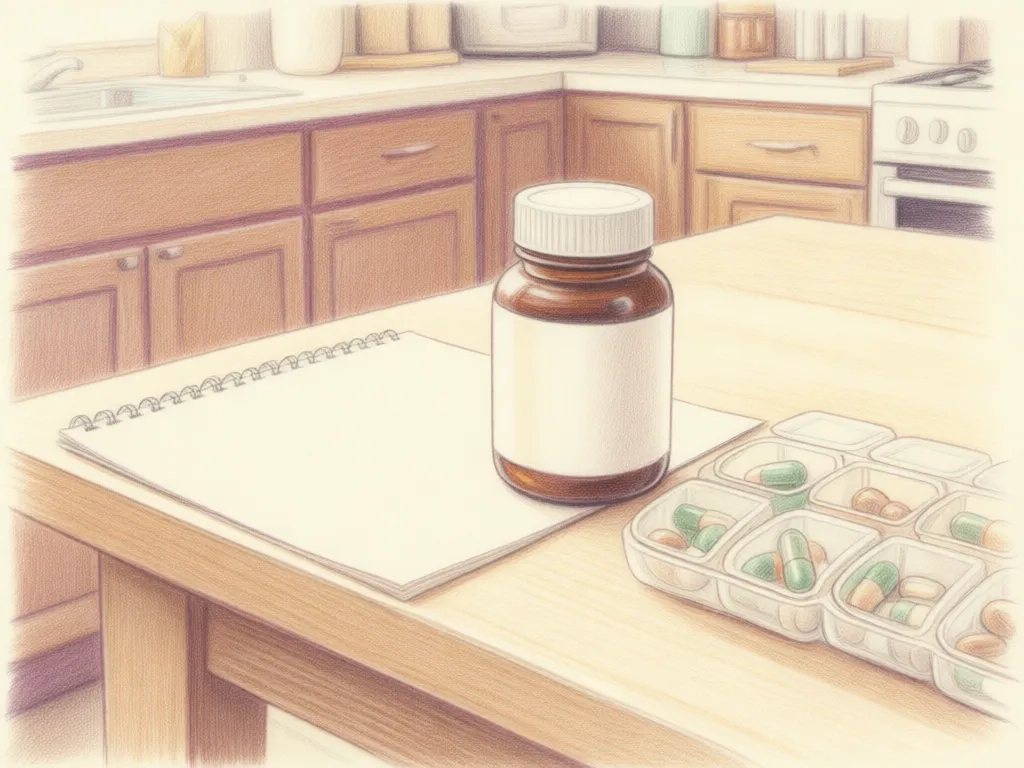
I asked about her stomach. She looked at me like I had switched subjects on her. But I had not. After sixty, one of the first things I want to know about a fading memory is not the memory at all. It is whether the body is still pulling what it needs out of food. The trouble is that the shortfall creeps in slowly and gets worse over time, and it is easily mistaken for other things, including the thing everyone is afraid of. Ruth had been on a stomach-calming prescription for years, the kind people take daily for heartburn, and long use of those medicines is one of the known ways the absorption of B12 gets choked off. So is metformin, the common blood sugar medicine. None of these are rare. All of them are checkable.
I have seen it go wrong, and it costs more than a name at a mailbox. A man at the senior centre on Elm Street, years back, came to the brown-bag mornings because his balance had gone strange and his fingers tingled and his wife said he was not himself. He assumed, and his wife assumed, and I will admit the thought crossed my mind too. It took a long while before anyone drew his blood. By the time the B12 problem showed up, the nerve damage had a head start. He got treatment and steadied, but he walks with a stick now, and his wife still talks about the year they lost to assuming. That is what waiting costs. Not drama. Just a year.
The myth is that a tired memory after sixty is one thing, one road, heading one direction. What actually happens, in my experience, is more like a kitchen drawer that sticks. Sometimes the drawer is warped. Sometimes a spoon is jammed behind it. B12 is one of the spoons. So is poor sleep, so is blood pressure, so is half the brown bags I sorted at the pharmacy counter. I wrote once about how ordinary forgetting at sixty has a shape to it, and this is the other side of that: the shape that deserves a blood test before anyone jumps to conclusions. The numbers surprised me when I first looked them up, and I have been around pills my whole working life. One person in five past sixty. That is not a fringe thing. That is the lady at your card table.
Here is the other thing people get wrong. They hear B12 and they picture a fix. Sometimes it is. I will not stand at the counter and tell you a vitamin hands your memory back. What I will say is that it is one of the few causes you can actually find with a simple test and actually treat, which makes it worth ruling in or ruling out early. That is a different promise, and a truer one.
If any of this sounds like your house, go watch the detailed explainer video before you change a single thing in your medicine cabinet. It lays out the usual cause and a fix, and it is worth your time before you start moving bottles around.
Ruth’s story put me in mind of my mother’s kitchen, the house we sold after she passed. My mother kept a paper calendar by the wall phone and wrote everything on it, hair appointments, the day the furnace man came, whose birthday was Tuesday. She trusted paper more than she trusted her own head, and she was right to. I keep the same habit, and a names notebook besides, and I fill my pill organiser on Sunday mornings with the radio on. My sister, my sister out in Arizona, calls me with her worries and I tell her what I tell everyone: write it down, then check the boring things first. Blood work is boring. Boring is good. Boring is fixable.
What I actually do, and what I told Ruth to do, is plain. Bring every bottle and box to someone who will read them, the pharmacist if you want a long unhurried look, because she has more time than the doctor. Ask the doctor for the blood test and mention any stomach medicine or metformin by name while you are in the chair. Mention any diet that cuts out meat, eggs, and dairy, or any eating trouble, past or present. Then wait for the number before you worry, and treat what the number says, the way your own doctor tells you to.
 How to keep your memory steadyA plain video on why memory gets patchy after sixty.
One more thing before I let you go. If the fog, the names, the walking-into-a-room feeling have been piling up, sit through the video on memory after sixty tonight, start to finish, and take a pen with you. Ruth came back last month with her lab slip in her hand and her neighbour’s name back in her mouth.