At the senior centre last month, a woman named Martha leaned over the sign-in table and said, low, “Diane, I think my brain is going. I forgot my own grandson’s teacher’s name in the middle of a sentence.” She looked frightened. I asked what she’d had for breakfast.
 Why memory slips after sixtyThe video explains the cause, and a way to steady your memory.
She laughed, then stopped laughing, because she couldn’t quite remember that either. Toast, maybe. She’d had a bad night. And she’d been skipping lunch lately because her daughter had her on some new eating plan.
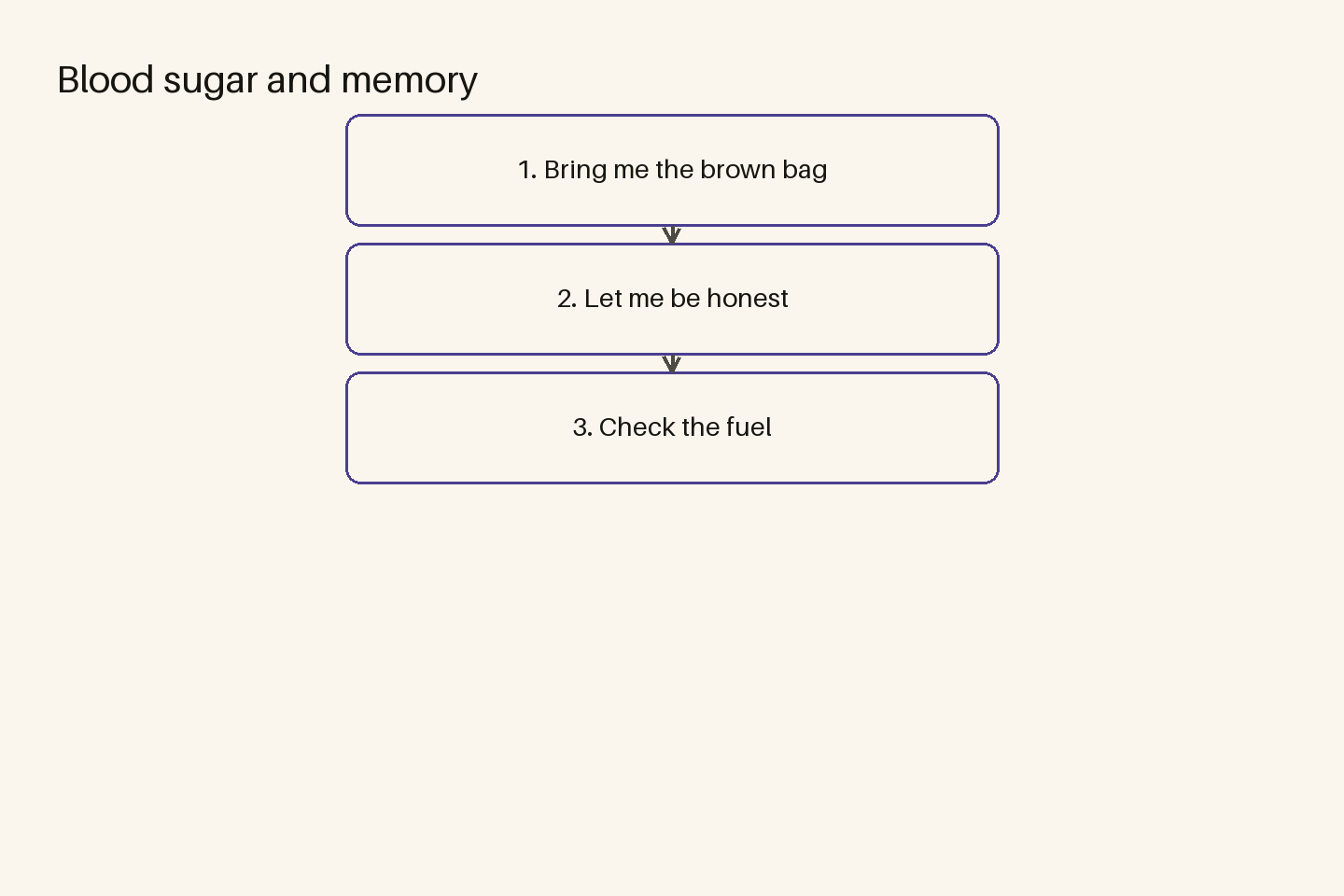
I said what I always say first. Bring me the brown bag. But after the bag, I ask about two other things. One is sleep. The other is blood sugar.
Martha hadn’t thought about blood sugar since her husband died. He was the one with the meter and the logbook. She just ate whatever was easy now. That is a sentence I hear a lot at that centre on Elm Street, and it is worth pausing on, because “whatever is easy” at seven in the morning and “whatever is easy” at two in the afternoon can add up to a brain that feels foggy by four.
The Meter in the Kitchen Drawer
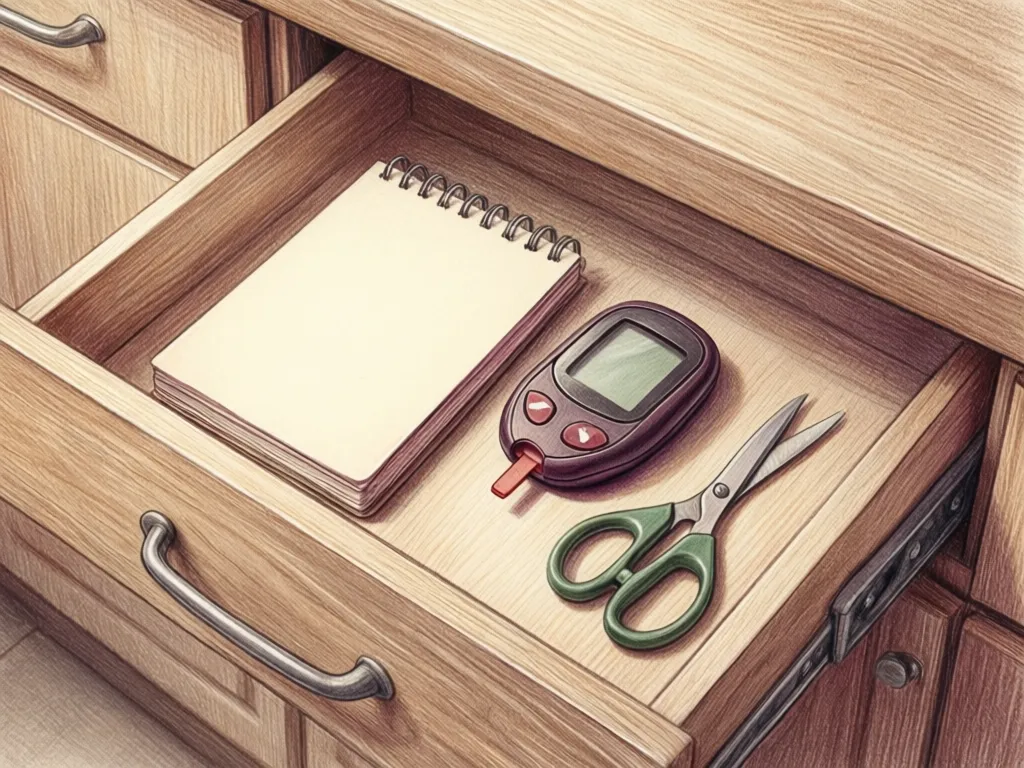
My husband keeps his testing things in the drawer next to the good scissors. He is not precious about it. He pricks his finger, writes the number in the same spiral notebook he’s used for years, and gets on with his toast. I teased him about the notebook until I started one myself.
Because here is what I noticed over the years, first behind the counter in the hospital basement and now at the brown-bag table: people worry about their memory long before anyone asks them what their blood sugar is doing. Not in a dire way. In an ordinary way. The words that won’t come at three in the afternoon. The feeling of walking into the kitchen and standing there.
Now, I am careful here, because I am not a doctor and I don’t diagnose. What I do is notice patterns, and one pattern is that the foggy feeling often has a shape to it. It comes after certain meals, or after no meals, or on days when someone ate a sweet roll for breakfast and nothing until dinner. If that sounds like measuring blood sugar at home territory, it is, and I’ll point you to my note on doing that at home when it makes sense for you.
I asked Martha to do one thing before she worried any further. Not a diet. Not a program. Just write down, for one week, what she ate and when the foggy feeling came. That’s all. She looked almost disappointed it wasn’t more complicated.
What the Notebook Showed Her
Martha came back in twelve days with a little pad of paper. I still have it in my folder. It’s the most useful thing anyone has handed me this year.
Monday: coffee, no breakfast, foggy by eleven. Tuesday: a pastry from the church kitchen, fine until two, then couldn’t remember the word for “thermostat.” Wednesday: eggs and toast, steady all day. Thursday: skipped lunch entirely, forgot Bev’s walking group even though she’s gone every Thursday for six years. Friday: eggs again, fine. The weekend was a muddle of grandkids and cake and she didn’t write anything down, which is honest and I told her so.
Seven days. Two real numbers that mattered to her: she felt foggy on the days she skipped a meal or ate something sweet alone, and she felt steady on the days she had some protein early. That is not a medical finding. That is one woman and a notebook. But it gave her something to bring to her doctor that was better than “I think my brain is going.”
Here is the myth I run into constantly, and I ran into it at the pharmacy counter for thirty-two years: people think memory trouble arrives like weather, out of nowhere, for no reason you can see. What actually happens, most of the time, is quieter than that. I have watched people panic for months about their minds when the first thing worth checking was whether they were eating in a way that kept their fuel level steady.
I don’t want to overstate this. Blood sugar is one thread, not the whole rope. If pressure is the louder issue in your house, my note on how pressure affects brain circulation covers that side. But sugar is the one people forget to check, because it feels like a young person’s problem or a diabetic person’s problem, and Martha is neither.
Go watch the deep-dive explainer video on what’s usually behind these slips after sixty, because it lays the whole picture out more clearly than I can at this table.
Martha’s year, in order, because I asked her if I could share it: in January she started eating something with protein before ten. In February she stopped skipping lunch, which she said was harder than it sounds when you live alone and nobody’s watching. By April her daughter reported she’d stopped calling three times a day in a panic. By summer she’d rejoined the walking group and Bev said she was keeping up at the front. In October she told me she still forgets words sometimes, but now she forgets them like a sixty-seven-year-old, not like someone falling off a cliff. Her words. I wrote them down.
What did it cost her? Let me be honest and imperfect about it, because I asked. The notebook she already had. The meter and strips she borrowed from her husband’s old supplies for the first month, then her doctor’s office sorted out what she actually needed after that. No equipment beyond what was already in the house. I can’t promise your arithmetic will look like hers. I can only tell you hers did.
I want to be clear about the limits here, because I have sat across from too many people who read one thing and run too far with it.
But before any of that, before the worrying and the late-night searches and the worst-case scrolling, there is a version of this that starts with a pad of paper and a week of honest attention. Check the fuel before you check the engine. That is what I told Martha, and it is what I’d tell you.
Now watch the memory slip breakdown video with a pen in your hand, and then come back and start your own week.
Martha’s pad of paper, by the way, is still going. She showed me last Tuesday. The entry for that morning said: oatmeal, walnuts, remembered the teacher’s name. Mrs. Okafor. She was very pleased with herself, and she had every right to be.